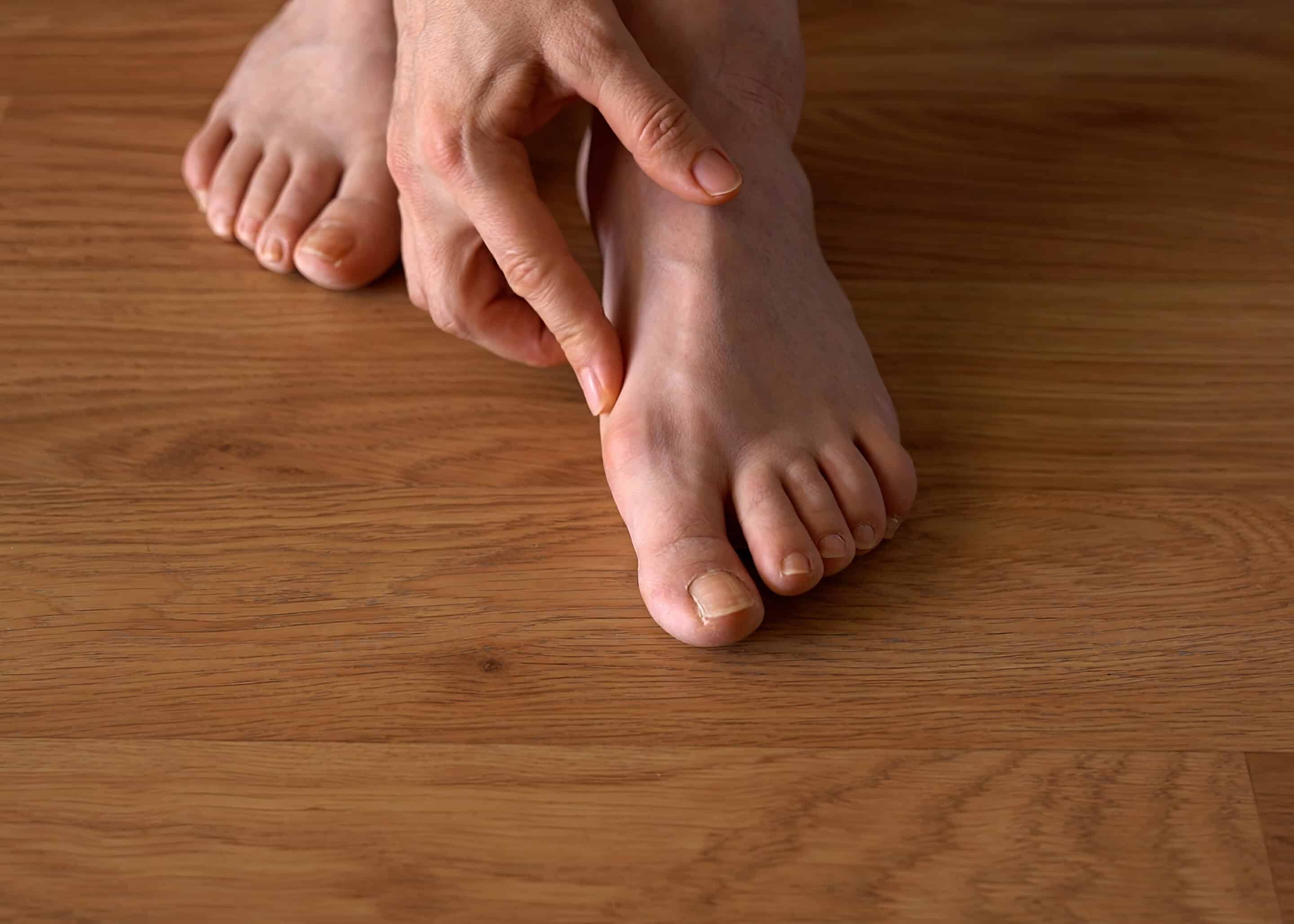
Bunions develop when the bones around the big-toe joint gradually move out of their normal alignment. As the big toe shifts toward the smaller toes, the joint at its base becomes more prominent, creating a noticeable bump along the side of the foot.
But what causes bunions in the first place?
The answer is usually a combination of factors. Genetics, inherited foot structure, abnormal foot mechanics, and footwear can all play a role in bunion development.
Understanding these contributing factors can help you recognize potential risks, manage discomfort, and know when to seek professional care.
What Causes Bunions?
A bunion, medically known as hallux valgus, is a structural foot deformity rather than simply a swollen bump.
It develops when the bones around the big-toe joint shift out of alignment. Over time, the big toe may lean toward the second toe while the joint at its base becomes increasingly prominent.
Although the exact cause isn’t always clear, inherited foot characteristics and changes in how the foot functions can contribute to bunion development. Certain types of footwear may also increase pressure and discomfort around the affected joint.
Because bunions involve changes in bone alignment, understanding their underlying causes is important for effective management.
Learn more about bunions and available treatment options.
Are Bunions Hereditary?
Yes, bunions can run in families, but that doesn’t mean the deformity itself is necessarily inherited.
Instead, people may inherit certain foot characteristics that make them more likely to develop bunions, including:
- Foot shape and bone structure
- Joint flexibility or instability
- Low arches or flat feet
- Differences in how the feet distribute pressure during movement
These inherited characteristics may affect the way the big-toe joint functions over time.
If several members of your family have bunions, you may have a higher likelihood of developing one. However, having a family history doesn’t guarantee that a bunion will form.
What Are the Most Common Risk Factors for Bunions?
Several factors may increase the likelihood of developing bunions or contribute to discomfort around the affected joint.
Foot Structure and Biomechanics
The natural shape and mechanics of your feet play an important role in how pressure is distributed when you walk or stand.
Certain characteristics, including flat feet, low arches, joint instability, and abnormal foot mechanics, may place additional stress on the big-toe joint. These factors can influence how the joint functions, particularly in people already predisposed to the condition.
Tight or Poorly Fitting Shoes
Shoes with narrow toe boxes or pointed designs can crowd the toes and increase pressure around the big-toe joint.
Although poorly fitting shoes aren’t necessarily the sole cause of bunions, they may aggravate an existing deformity and increase discomfort.
Choosing footwear with adequate room for your toes can help reduce unnecessary pressure and irritation.
High Heels
High heels shift more body weight toward the front of the foot, increasing pressure on the forefoot.
When combined with narrow or pointed toe boxes, this additional pressure can crowd the toes and aggravate bunion symptoms. People who frequently wear these styles may experience more discomfort if they already have a bunion.
Previous Foot Injuries
Injuries affecting the bones, ligaments, or joints of the foot may change how the foot moves and distributes weight.
In some cases, these changes can contribute to instability or abnormal alignment around the big-toe joint.
Certain Medical and Joint Conditions
Some medical conditions affecting the joints, connective tissues, or overall foot structure may increase the likelihood of developing bunions.
For example, inflammatory arthritis can affect the joints and, in some cases, contribute to deformities in the feet. If you have a condition that affects your joints, a podiatrist can help assess your foot health and address any developing concerns.
Can Shoes Cause Bunions?
Shoes are often associated with bunions, but they aren’t considered the sole cause of the condition. Inherited foot structure and biomechanics can play important roles in determining whether someone will develop a bunion.
However, footwear that squeezes the toes together or places excessive pressure on the forefoot can aggravate discomfort around an existing bunion.
For someone already predisposed to bunions, regularly wearing restrictive footwear may contribute to additional stress around the big-toe joint. The extent to which footwear directly affects structural progression varies and isn’t fully understood.
Choosing shoes that accommodate your natural foot shape can help minimize irritation and pressure.
What Can Make a Bunion Worse?
Bunions don’t progress at the same rate for everyone. Some remain relatively stable for years, while others gradually become more pronounced.
Several factors can increase discomfort or place additional stress on the affected joint:
- Wearing narrow, tight, or restrictive shoes
- Repeated pressure against the bunion
- Activities that consistently aggravate the joint
- Wearing shoes that rub against the prominent joint
- Underlying foot-mechanics issues
- Delaying evaluation when pain or toe misalignment increases
As the bunion becomes more pronounced, finding comfortable shoes may become difficult. Some people also develop stiffness, irritation, or discomfort while walking.
Paying attention to these changes can help you recognize when additional care may be needed.
Can You Prevent Bunions?
It isn’t always possible to prevent bunions, especially if you have inherited foot characteristics that make you more susceptible.
However, certain habits can help reduce unnecessary stress on the big-toe joint and manage symptoms.
- Choose properly fitting shoes: Look for supportive footwear with enough room for your toes to move comfortably.
- Avoid shoes that consistently cause pain: If footwear presses against your bunion or crowds your toes, consider a roomier alternative.
- Address foot-mechanics issues: If abnormal foot mechanics contribute to discomfort, supportive footwear or orthotic inserts may help redistribute pressure.
- Seek professional evaluation when symptoms change: Increasing pain, stiffness, or visible changes in toe alignment may indicate that additional care is needed.
For some patients, custom orthotics may help improve comfort and redistribute pressure during everyday activities. However, orthotics do not permanently reverse an existing bunion.
When Should You See a Podiatrist for a Bunion?
Not every bunion causes significant discomfort, but certain symptoms may indicate that it’s time for a professional evaluation.
Consider seeing a podiatrist if:
- Bunion pain becomes persistent or increasingly uncomfortable.
- Walking or standing causes discomfort.
- Your big toe is shifting further toward the other toes.
- The big-toe joint becomes stiff or difficult to move.
- Finding comfortable shoes becomes challenging.
- Corns or calluses develop from crowded toes.
- Home management no longer provides sufficient relief.
- Foot pain begins interfering with work, exercise, or daily activities.
Seeing a podiatrist doesn’t automatically mean you’ll need surgery.
Many patients begin with conservative treatments such as footwear modifications, protective padding, or orthotics to help manage pain and reduce pressure.
If symptoms become severe or conservative treatments aren’t effective, bunion surgery may be considered.
Learn more about professional bunion evaluation and treatment.
Frequently Asked Questions About Bunion Causes
Why did I suddenly develop a bunion?
Bunions typically form gradually rather than appearing overnight.
However, you may suddenly notice the bump when it becomes more prominent, starts rubbing against your shoes, or causes discomfort.
If a new bump appears suddenly or is accompanied by significant pain or swelling, a podiatrist can help determine whether it’s a bunion or another foot condition.
Why do bunions run in families?
Bunions often run in families because certain foot structures and biomechanical characteristics can be inherited.
These characteristics may affect joint stability, alignment, and how pressure is distributed across the foot.
However, having relatives with bunions doesn’t mean you will necessarily develop one.
Can bunions get worse with age?
Yes. Bunions can become more pronounced over time as the alignment of the big-toe joint changes.
However, progression varies from person to person. Some bunions remain relatively stable, while others gradually lead to increased discomfort, stiffness, or difficulty wearing shoes.
Get Help for Bunions in Gilbert & Casa Grande, AZ
If you’re experiencing bunion pain or noticing changes in the alignment of your big toe, Advanced Ankle & Foot can help.
Our podiatrists provide professional bunion evaluations and personalized treatment options for patients in Gilbert and Casa Grande, Arizona.
Depending on your symptoms and the severity of your bunion, treatment may include conservative approaches to reduce discomfort and improve foot function. When appropriate, bunion surgery may also be recommended.
You don’t have to wait until bunion pain interferes with your daily activities to seek care.
Call (480) 962-4281 or request an appointment to schedule a bunion evaluation with Advanced Ankle & Foot.