
Stress Fractures
Has the same spot on your foot been hurting every time you finish a run? Or has a longer walking routine left your heel sore enough to change your stride? When discomfort keeps returning with activity, a stress fracture is one possible explanation.
Advanced Ankle & Foot evaluates foot, ankle, and heel stress fractures in Gilbert and Casa Grande, Arizona. Request an evaluation for persistent pain so you can understand what needs protection and how to move forward.
What is a Stress Fracture?
A stress fracture is a small crack or break in a bone caused by repeated pressure or impact over time. Unlike a typical fracture that may happen after a fall, accident, or direct injury, a stress fracture develops gradually when a bone experiences more stress than it can repair.
Your bones are constantly repairing themselves to keep up with the demands of everyday movement and physical activity. However, repetitive activities like running, jumping, or increasing exercise intensity too quickly can put more strain on a bone than it can handle. Over time, this can lead to tiny cracks that develop into a stress fracture.
Symptoms often start gradually and may initially feel like ordinary exercise soreness. As the injury progresses, pain may become more noticeable during activity and eventually occur even when you’re resting.
Recognizing the signs early and getting the right treatment can help prevent the injury from worsening and support proper healing.
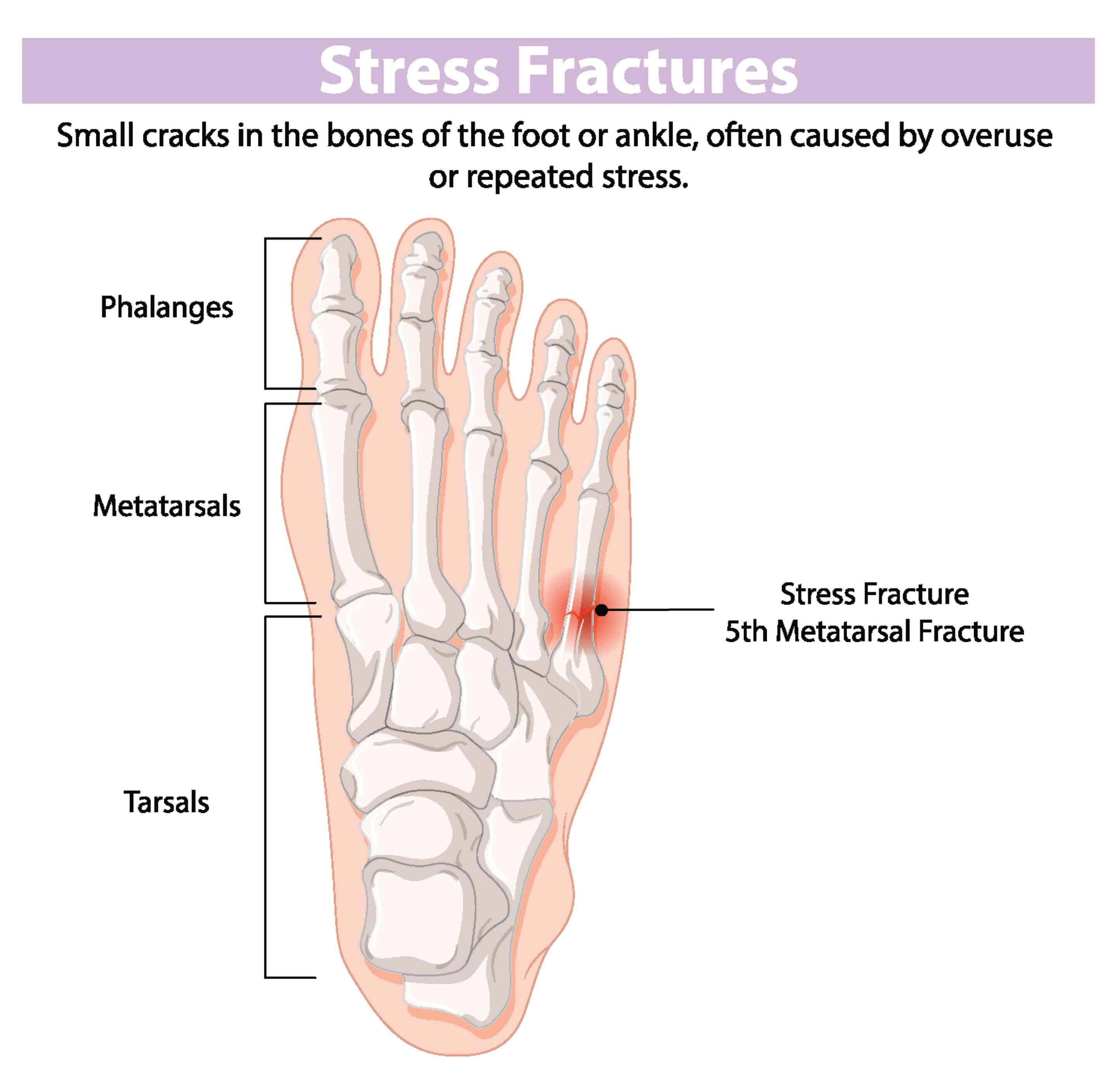
Where Do Stress Fractures Occur in the Foot?
Stress fractures usually develop in several bones throughout the foot, especially those that absorb repeated pressure during walking, running, or other physical activities.
The metatarsals, which are the long bones connecting the middle of your foot to your toes, are one of the most common locations for stress fractures. They can also occur in the heel bone (calcaneus), the navicular bone in the middle of the foot, and smaller bones beneath the big toe.
The location of a stress fracture is important because some bones have a higher risk of healing complications than others. Even if the pain seems mild, continuing to put pressure on an injured bone can make the fracture worse.
Heel Stress Fractures
A calcaneal stress injury may first hurt during a walk or workout, then become troublesome during shorter activities. As it progresses, rest may no longer provide the same relief.
Several conditions cause heel pain, including problems involving soft tissues. An examination helps distinguish a bone injury from these other causes before treatment begins.
Symptoms of a Stress Fracture
Stress fractures usually develop gradually and may become more noticeable as you continue placing pressure on the affected foot. Common symptoms include:
-
- Discomfort concentrated in one part of the foot, ankle, or heel.
- Pain that increases as you walk, run, or remain on your feet.
- Tenderness over a particular bone.
- Swelling near the painful area.
- Early relief with rest, followed by increasingly persistent symptoms.
- Difficulty exercising or walking comfortably.
What Causes Stress Fractures?
Sudden Increases in Activity
A large jump in running distance, a new fitness class, or returning to sports after a break can exceed what your bones are currently prepared to handle. Even enthusiastic vacation walking or a demanding new work routine can change the load substantially.
Repetitive High-Impact Activity
Running, jumping, and court sports repeatedly load the same structures. When recovery between sessions is insufficient, small amounts of damage can accumulate. Our sports injury care considers both the injury and the demands of your activity.
Foot Structure and Biomechanics
Your arch shape and the way your foot moves influence where pressure falls. Certain movement patterns can concentrate force in one region. These factors are considered alongside training habits and bone health, since foot structure alone does not explain every fracture.
Footwear and Training Surfaces
Worn shoes, an abrupt footwear change, or switching to a different exercise surface can alter loading. Bring your usual activity shoes to the appointment if possible. Their fit and condition may help us understand what changed before the pain began.
Bone Health
Your overall bone health also plays a role in your risk of developing a stress fracture. Reduced bone density, nutritional deficiencies, inadequate calorie intake, and certain medical conditions or medications can affect bone strength and healing. If you’ve experienced previous fractures or developed foot pain without a significant increase in activity, be sure to mention this during your appointment.
How Is a Foot Stress Fracture Diagnosed?
Diagnosing a foot stress fracture starts with understanding your symptoms and what may have caused the injury. Your podiatrist will ask when the pain started, where you feel it, and what activities make it better or worse.
Next, your podiatrist will examine your foot for swelling, tenderness, and other signs of injury. They may also evaluate your foot structure, movement, and walking pattern to look for factors that could be contributing to the problem. Other foot and ankle conditions can produce similar complaints and may need to be considered.
Digital X-rays provide information about bone structure, but an early stress fracture may not appear on the first images. A normal initial X-ray does not automatically rule it out.
If the examination still suggests a bone stress injury, additional imaging, such as MRI, or follow-up imaging may be recommended. Protection may begin while the diagnosis is being clarified. We explain what the findings mean and whether further assessment of bone health is appropriate.

How Are Stress Fractures Treated?
The plan depends on the injured bone, the extent of damage, and your daily demands. Most stress fractures are managed without an operation, but the amount of protection varies.
Rest and Activity Modification
Healing requires reducing the forces that caused the injury. That may mean stopping running, jumping, or another painful activity. Pushing through symptoms can extend recovery or allow the crack to worsen.
Ask which activities you can continue. An exercise described as low impact may still load the injured area, so alternatives should be selected for your specific fracture.
Immobilization and Protection
Some injuries can be managed in protective footwear. Others need a walking boot, brace, or cast. Crutches or another mobility aid may be necessary when putting weight on the foot would interfere with healing.
We provide instructions about walking and device use. Wearing a boot does not automatically mean unrestricted walking is safe. Tell us about work duties, stairs, and other demands so the plan is practical for your routine.
Addressing Foot Mechanics
When pressure distribution contributes to the injury, supportive shoes or custom orthotics may be useful during the appropriate phase of care. These measures complement the required protection. They do not replace activity restrictions or make an unhealed fracture ready for sport.
Surgery for More Serious Stress Fractures
Certain fractures have a higher risk of failing to heal. Surgery may be considered for those injuries, displaced or unstable fractures, or fractures that heal poorly despite appropriate care. Our foot and ankle surgery information explains this part of the practice. Your surgeon discusses the proposed procedure, alternatives, and recovery requirements.
How Long Does a Stress Fracture Take to Heal?
There is no single recovery calendar for every bone stress injury. The bone involved, severity, blood supply, and how long symptoms were present all affect progress. Some injuries need substantially longer protection than others.
Less pain is encouraging, but it does not by itself establish that the bone is ready for repeated impact. Follow-up examinations and imaging when indicated help guide the next stage.
Your return may progress from permitted daily walking to rehabilitation and then sport-specific activity. Increase demands according to your podiatrist’s recommendations. Returning too quickly can undo progress or lead to another injury.
When Should You See a Podiatrist for Foot or Heel Pain?
Arrange an assessment when pain repeatedly returns with activity, stays focused in one area, or develops after a substantial increase in exercise. Swelling, worsening symptoms, and pain that does not settle with rest also deserve attention.
If walking becomes uncomfortable or you suspect a fracture, stop the aggravating activity and seek care. Sudden severe pain, an inability to bear weight, visible deformity, or substantial swelling after an injury requires prompt medical assessment.
Get Treatment for Stress Fractures Today!
A recurring sore spot should not keep dictating your walks, workouts, or workday. Advanced Ankle & Foot provides professional diagnosis and personalized treatment for foot, ankle, and heel stress fractures in Gilbert and Casa Grande, Arizona.
Ready to take the next step towards relief? Request an appointment with Advanced Ankle & Foot today. You can easily schedule your visit by calling our office or filling out our online contact form. Don’t let foot pain hold you back—early treatment is the key to effective recovery and long-term foot health.